Lady Lisa

From England to Belgium and the S&CR

Industrial History Comes Full Circle

This remarkable little engine is an evocative link between Britain’s pioneering railway age and the rapidly developing railways of Continental Europe. Built in 1920 by the Belgium industrial giant, Société anonyme John Cockerill, this company had its roots in the English Industrial Revolution.

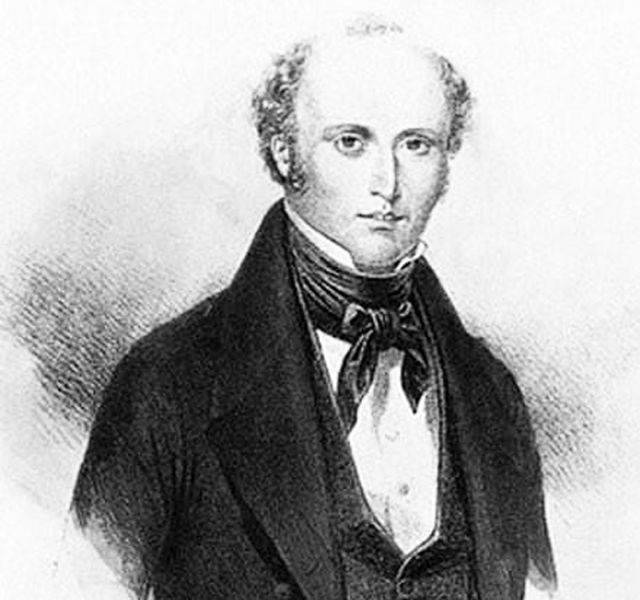
The story of Société anonyme John Cockerill begins in England.  John Cockerill, born in Lancashire in 1790 to an English family of engineers, carried the skills and traditions of Britain’s pioneering iron and steam industries to continental Europe.

In 1817, he and his brother James established extensive engineering works at Seraing, near Liège, Belgium, laying the foundations for what would become one of Europe’s greatest industrial enterprises.

By 1842, the Cockerill works had grown into a vast state-controlled centre of iron-making, engineering and steam technology. Drawing heavily upon British engineering practice while developing its own Continental expertise, Cockerill produced steam engines, boilers, industrial machinery and, increasingly, railway locomotives.

Now based at the S&CR, the Lady Lisa is the legacy of the steam pioneers who helped spread railway technology across Europe and the wider world.

Build Details

0-4-0 VBT

  • Builder:  Société anonyme John Cockerill
  • Build Location: Seraing, Belgium.
  • Build Date: 1920
  • Builder’s Number : 2945
  • Cylinder Size: 285mm x 320mm (roughly 11”x12.5”)
  • Wheel diameter: 700mm (2’3”)
  • Weight : 19 Tonnes empty
  • Coal Capacity: 0.5 tonnes
  • Water Tank Capacity : 1400 Litres
  • Length : 5.16m
  • Width : 2.62m
  • Height : 3.40m
  • Working pressure : 170psi or 12 ATM

1920 - 1967

An Industrial Workhorse

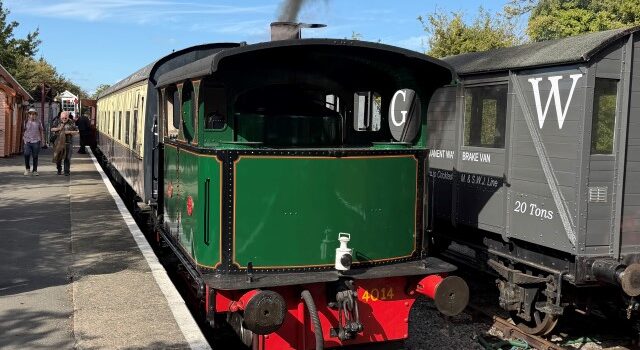
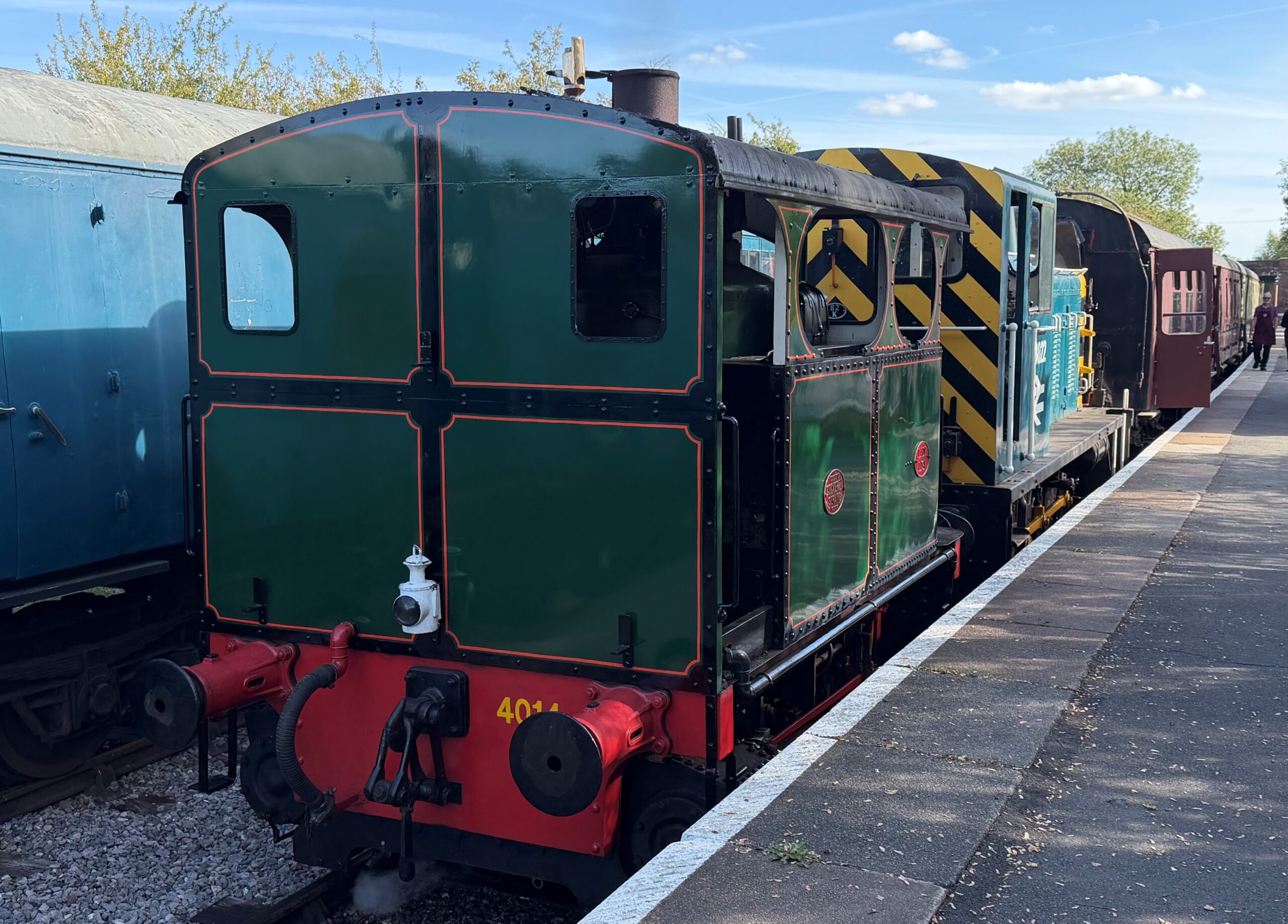
Lady Lisa is a Cockerill Type IV industrial shunting locomotive and looks somewhat unusual compared to typical UK steam locomotives due to the use of a vertical boiler with chimney up through the middle of the roof rather than the more typical arrangement of a horizontal boiler with firebox and cab at one end and chimney at the other.   She worked from 1920 to 1967 in Brussels Gas Works in Belgium.   Her duties were to shunt coal wagons around the works.

She was an ideal design for working in industrial premises as she has a vertical boiler which permits a short wheel base for negotiating tight yard curves and also allows steam to be raised in approximately 90 minutes from cold or just 45 minutes if she is warm from the being used the previous day.   It was a very successful design with 352 of the Type IV’s being built between 1883 and 1949.

A total of 891 Cockerill Vertical boilered locomotives were built between 1867 and 1949 covering 5 different sizes of which Lady Lisa is the second largest.

1967 -1987

Redunancy and Discovery

Following her 47 years of service to the gasworks, Lady Lisa was sent to a scrapyard in 1967, where she was stored with four other locos of the same type.  They languished there for 20 years until a group of British enthusiasts discovered them and purchased them to bring to England.

1987 - 2009

Rescue and Restoration

Lady Lisa was purchased by Ben Tew and restoration started quickly, with her being returned to steam just 5 years later in 1992 at the Northampton and Lamport Railway.  Subsequently she worked at a variety of railways around the Midlands, had a 10 year overhaul 2002 to 2004 then continued service around the midlands.

2009 - 2026

Overhaul and a New Life

The current owners, Colin & Lisa Healey, purchased the locomotive in 2009 when she was at the Telford Steam Railway.  They moved her to the Hollycombe working steam museum in Hampshire and then to the Lavender Line in Sussex in 2014 with just one year left on her 10 year ticket.

Another 10 year overhaul started in 2015, which unfortunately required a new firebox as well as major refurbishment of other boiler components.  She returned to steam in 2018 and remained at the Lavender Line until September 2026 when she moved to the Swindon and Cricklade Railway.

2026 - Present

A Story to be Continued...

She was first steamed at Hayes Knoll on 26th September and after initial testing in the yard, she ran a test run to Swindon Mouldon Hill and return hauling a passenger train consisting of two MK I coaches and the rostered 03 diesel.
WordPress Cookie Plugin by Real Cookie Banner